Ban Ta Klang Elephant Village: Living With Elephants in Surin's Kuy Village
About 58 kilometres north of Surin city, down a quiet road toward Tha Tum, there is a village where elephants are not an attraction — they are neighbours. Ban Ta Klang is home to the Kuy people (also called Suai), Thailand's most famous elephant keepers, and for centuries their mahouts have raised, trained and lived alongside elephants as part of the family. Visiting today means stepping into that living relationship: elephants bathing in the Mun River at dawn, keepers calling them by name, and a whole village whose daily rhythm still runs on elephant time.

Photo: Marcin Nowak, CC BY 2.5, via Wikimedia Commons
The Kuy People and Their Elephants
The Kuy are an ethnic group native to this corner of Isan, and their bond with elephants goes back hundreds of years. In Kuy tradition, a mahout — called a kwanchang — does not simply work with an elephant; he raises it, often from a calf, and the animal becomes part of the household. Elephants were once the region's working animals, hauling timber in the forests along the Cambodian border. Today most of Ban Ta Klang's elephants work in tourism and conservation instead, and the village is the heart of Surin's elephant culture: the elephants you see at the famous Surin Elephant Round-up each November come from here. Walk the village lanes and you will see elephants tethered in family compounds, mahouts chatting in the Kuy language, and a community that treats its elephants with obvious pride.
The Elephant Study Centre and Elephant World
Ban Ta Klang has two main visitor sites, a short distance apart. The Elephant Study Centre is the older of the two: a research and conservation centre where you can watch mahouts work with the elephants, see the training grounds and learn how the Kuy keep their animals. Elephant World is the newer, larger showground built for visitors, with a daily programme of elephant shows — elephants playing football, painting, dancing and demonstrating the skills their mahouts teach them. Both are worth a look. The Study Centre feels quieter and more hands-on, while Elephant World is the place for the big show. If you only have a couple of hours, head to Elephant World for the show, then wander the village itself.
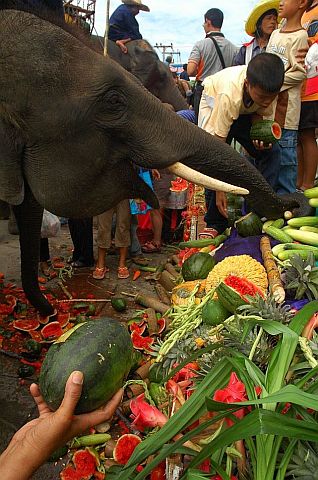
Photo: Marcin Nowak, CC BY 2.5, via Wikimedia Commons
Watching the Elephants Bathe
The best moment of the day at Ban Ta Klang is the morning bath. Around 8–9am, mahouts lead the elephants down to the Mun River, where the animals wade in, splash, roll and spray water over their backs while their keepers scrub them with brushes. It is the most natural, joyful thing you will see all day — and it is also the most honest: this is daily care, not a performance. Arrive early, stand on the bank, and watch. Some mornings visitors are invited to help wash an elephant; ask at the centre rather than assuming, and bring clothes you do not mind getting wet.
Visiting Ethically: Watch, Don't Ride
Let us be honest: elephant tourism in Thailand has a troubled history, and Ban Ta Klang is no exception. This is a village that makes its living from elephants, and some of what you see — especially riding and some show tricks — is controversial. The most responsible way to visit is simple: watch, don't ride. Choose the bathing and feeding over a ride, skip any show that looks stressful for the animal, and spend your money on the keepers — buy a basket of bananas, pay for the bath, talk to the mahouts. The elephants here are well fed and well loved by their families, and the village's future depends on visitors who care about the animals as much as the photos.

Photo: Per Meistrup, CC BY-SA 3.0, via Wikimedia Commons
Practical Details: Hours, Prices, Getting There
Elephant World is usually open daily, roughly 8am–5pm, with the main show in the late morning. The bathing happens early, so come for 8–9am. The Study Centre keeps similar hours. Prices change, so treat these as typical figures quoted by recent visitors and confirm at the gate.
| Item | Price (baht) |
|---|---|
| Elephant World entry — foreign adult | ~100 |
| Elephant World entry — Thai adult | ~50 |
| Elephant Study Centre entry | ~50 |
| Basket of bananas or sugarcane | ~20–50 |
| Joining the elephant bath | ~100–200 |
Ban Ta Klang is about 58 km north of Surin city in Tha Tum district, an easy drive of about an hour on Highway 214. By public transport, take a bus or songthaew from Surin bus station toward Tha Tum and ask to get off at Ban Ta Klang, then take a motorbike taxi the last stretch. Most visitors come by car or with a driver from Surin city — expect around 800–1,200 baht for a half-day hire.
Tips for Your Visit
Go early for the river bath — it is the highlight, and the light is best before 9am. Bring small notes (20s and 50s) for bananas and the entry fee. Wear shoes you can slip off and clothes you can get wet. Ask before taking close-up photos of people, and never feed an elephant without the mahout's say-so. If your dates line up with November, combine the trip with the Surin Elephant Round-up — the village elephants are the stars of the show.
Ban Ta Klang is not a polished theme park — it is a working village, muddy lanes and all. That is exactly why it is worth the drive: nowhere else in Thailand can you watch a community and its elephants living side by side the way the Kuy have for centuries.
— ภาษาไทย —
หมู่บ้านบ้านตากลางอยู่ห่างจากตัวเมืองสุรินทร์ไปทางเหนือประมาณ 58 กิโลเมตร บนถนนเงียบ ๆ มุ่งหน้าไปอำเภอท่าตูม ที่นี่ช้างไม่ใช่เพียงสิ่งดึงดูดนักท่องเที่ยว แต่เป็นเพื่อนบ้าน ชาวกูย (หรือชาวส่วย) ซึ่งเป็นกลุ่มชาติพันธุ์ที่มีชื่อเสียงที่สุดของไทยในเรื่องการเลี้ยงช้าง อาศัยอยู่ที่นี่ และเป็นเวลาหลายร้อยปีที่ควาญช้างของพวกเขาเลี้ยงดู ฝึกฝน และใช้ชีวิตร่วมกับช้างเหมือนสมาชิกในครอบครัว การมาเยือนวันนี้คือการได้ก้าวเข้าไปในความสัมพันธ์ที่มีชีวิตนั้น ช้างลงอาบน้ำในแม่น้ำมูลยามเช้า ควาญเรียกชื่อช้างแต่ละเชือก และทั้งหมู่บ้านยังคงดำเนินชีวิตตามจังหวะของช้าง
ชาวกูยกับช้างของพวกเขา
ชาวกูยเป็นกลุ่มชาติพันธุ์พื้นเมืองของภาคอีสานแถบนี้ และความผูกพันกับช้างของพวกเขาย้อนกลับไปหลายร้อยปี ตามประเพณีของชาวกูย ควาญช้างไม่ได้เพียงแค่ทำงานกับช้าง แต่เลี้ยงมันมาตั้งแต่ยังเป็นลูกช้าง และช้างก็กลายเป็นส่วนหนึ่งของครอบครัว ในอดีตช้างเป็นสัตว์ใช้งานของภูมิภาคนี้ ลากไม้ในป่าตามแนวชายแดนกัมพูชา ทุกวันนี้ช้างส่วนใหญ่ของบ้านตากลางทำงานด้านการท่องเที่ยวและการอนุรักษ์แทน และหมู่บ้านแห่งนี้คือหัวใจของวัฒนธรรมช้างสุรินทร์ ช้างที่คุณเห็นในงานช้างสุรินทร์ทุกเดือนพฤศจิกายนก็มาจากที่นี่ เดินไปตามตรอกในหมู่บ้าน คุณจะเห็นช้างผูกไว้ในบริเวณบ้าน ควาญช้างพูดคุยกันเป็นภาษากูย และชุมชนที่ภูมิใจในช้างของตนอย่างเห็นได้ชัด
ศูนย์คชศึกษาและหมู่บ้านช้าง (Elephant World)
บ้านตากลางมีสถานที่สำหรับผู้มาเยือนหลักสองแห่งอยู่ไม่ไกลกัน ศูนย์คชศึกษาเป็นแห่งที่เก่ากว่า เป็นศูนย์วิจัยและอนุรักษ์ที่คุณสามารถชมควาญช้างทำงานกับช้าง ชมลานฝึก และเรียนรู้ว่าชาวกูยดูแลช้างอย่างไร ส่วนหมู่บ้านช้าง (Elephant World) เป็นลานแสดงแห่งใหม่ที่ใหญ่กว่า สร้างขึ้นสำหรับผู้มาเยือน มีการแสดงช้างทุกวัน ช้างเล่นฟุตบอล วาดภาพ เต้นรำ และแสดงทักษะที่ควาญสอน ทั้งสองแห่งน่าไปชม ศูนย์คชศึกษาเงียบสงบกว่าและใกล้ชิดกว่า ส่วนหมู่บ้านช้างเหมาะกับการชมการแสดงใหญ่ หากคุณมีเวลาเพียงสองสามชั่วโมง ให้ไปที่หมู่บ้านช้างเพื่อชมการแสดง แล้วเดินเล่นชมหมู่บ้าน
ชมช้างอาบน้ำ
ช่วงเวลาที่ดีที่สุดของวันที่บ้านตากลางคือการอาบน้ำยามเช้า ราว 8–9 โมงเช้า ควาญจะนำช้างลงแม่น้ำมูล ช้างจะเดินลงน้ำ กระโดดเล่น กลิ้งตัว และพ่นน้ำใส่หลัง ขณะที่ควาญขัดตัวให้ด้วยแปรง เป็นภาพที่เป็นธรรมชาติและน่ารื่นรมย์ที่สุดที่คุณจะได้เห็นตลอดวัน และยังเป็นภาพที่จริงที่สุดด้วย เพราะนี่คือการดูแลประจำวัน ไม่ใช่การแสดง มาถึงแต่เช้า ยืนชมจากริมฝั่ง บางเช้าผู้มาเยือนจะได้รับเชิญให้ช่วยอาบน้ำช้าง ให้ถามที่ศูนย์ก่อน อย่าคิดไปเอง และเตรียมเสื้อผ้าที่เปียกได้มาด้วย
เที่ยวอย่างมีจริยธรรม: ชม อย่าขี่
พูดกันตรง ๆ การท่องเที่ยวช้างในประเทศไทยมีประวัติที่ไม่น่าภาคภูมิใจนัก และบ้านตากลางก็ไม่ใช่ข้อยกเว้น นี่คือหมู่บ้านที่เลี้ยงชีพจากช้าง และบางสิ่งที่คุณเห็น โดยเฉพาะการขี่ช้างและการแสดงบางอย่าง เป็นเรื่องที่ถกเถียงกัน วิธีมาเยือนอย่างรับผิดชอบที่สุดนั้นง่ายมาก ชม อย่าขี่ เลือกชมการอาบน้ำและการให้อาหารแทนการขี่ ข้ามการแสดงใดที่ดูทำให้สัตว์เครียด และใช้จ่ายเงินกับควาญช้าง ซื้อกล้วยสักตะกร้า จ่ายค่าอาบน้ำช้าง พูดคุยกับควาญ ช้างที่นี่ได้รับอาหารดีและได้รับความรักจากครอบครัว และอนาคตของหมู่บ้านขึ้นอยู่กับนักท่องเที่ยวที่ใส่ใจสัตว์พอ ๆ กับภาพถ่าย
ข้อมูลปฏิบัติ: เวลาเปิด ราคา การเดินทาง
หมู่บ้านช้างมักเปิดทุกวัน ประมาณ 8 โมงเช้าถึง 5 โมงเย็น มีการแสดงหลักช่วงสาย การอาบน้ำช้างจะเกิดขึ้นแต่เช้า ดังนั้นควรมาให้ถึงราว 8–9 โมงเช้า ศูนย์คชศึกษามีเวลาเปิดคล้ายกัน ราคาอาจเปลี่ยนแปลงได้ โปรดถือว่าตัวเลขต่อไปนี้เป็นราคาทั่วไปที่นักท่องเที่ยวรายงานมาเมื่อไม่นานมานี้ และยืนยันอีกครั้งที่ประตูทางเข้า
| รายการ | ราคา (บาท) |
|---|---|
| ค่าเข้าหมู่บ้านช้าง — ชาวต่างชาติ (ผู้ใหญ่) | ~100 |
| ค่าเข้าหมู่บ้านช้าง — คนไทย (ผู้ใหญ่) | ~50 |
| ค่าเข้าศูนย์คชศึกษา | ~50 |
| กล้วยหรืออ้อยหนึ่งตะกร้า | ~20–50 |
| ร่วมอาบน้ำช้าง | ~100–200 |
บ้านตากลางอยู่ห่างจากตัวเมืองสุรินทร์ไปทางเหนือประมาณ 58 กิโลเมตร ในอำเภอท่าตูม ขับรถประมาณหนึ่งชั่วโมงบนทางหลวงหมายเลข 214 หากเดินทางด้วยรถสาธารณะ ขึ้นรถโดยสารหรือสองแถวจากสถานีขนส่งสุรินทร์ไปทางท่าตูม แล้วบอกคนขับว่าลงที่บ้านตากลาง จากนั้นนั่งมอเตอร์ไซค์รับจ้างต่อ นักท่องเที่ยวส่วนใหญ่มาด้วยรถยนต์หรือจ้างคนขับจากตัวเมืองสุรินทร์ ราคาประมาณ 800–1,200 บาทสำหรับการเช่าครึ่งวัน
เคล็ดลับสำหรับการมาเยือน
มาแต่เช้าเพื่อชมช้างอาบน้ำในแม่น้ำ นั่นคือไฮไลต์ และแสงแดดสวยที่สุดก่อน 9 โมงเช้า เตรียมเงินย่อย (ธนบัตร 20 และ 50 บาท) สำหรับซื้อกล้วยและค่าเข้า ใส่รองเท้าที่ถอดง่ายและเสื้อผ้าที่เปียกได้ ขออนุญาตก่อนถ่ายภาพผู้คนใกล้ ๆ และอย่าให้อาหารช้างโดยไม่ได้รับอนุญาตจากควาญ หากวันของคุณตรงกับเดือนพฤศจิกายน ลองไปชมงานช้างสุรินทร์ด้วย ช้างของหมู่บ้านคือดาวเด่นของงาน
บ้านตากลางไม่ใช่สวนสนุกที่ตกแต่งสวยงาม แต่เป็นหมู่บ้านที่ทำงานจริง มีถนนดินโคลน นั่นแหละคือเหตุผลที่ควรขับรถมา เพราะไม่มีที่ไหนในประเทศไทยที่คุณจะได้เห็นชุมชนกับช้างใช้ชีวิตร่วมกันเหมือนที่ชาวกูยทำมาหลายร้อยปี


Comments
Post a Comment