A Morning Walk in Surin's Old Town: Shrines, Shophouses and Strong Coffee
A Morning Walk in Surin's Old Town: Shrines, Shophouses and Strong Coffee
Surin's old town rewards anyone willing to be on the street by seven. The heat has not arrived, the shrine bells are ringing, monks are on their alms round, and the shophouse cafes are pulling the first strong coffees of the day. This easy loop — about two kilometres, all flat — strings together the City Pillar Shrine, Wat Burapharam and the old commercial streets into one unhurried morning. Do it on your first day and the whole city makes sense afterwards.

Start here: the City Pillar Shrine in Surin's old town, busiest and best at dawn. Photo: JJ Harrison, CC BY 3.0, via Wikimedia Commons
Start at the City Pillar Shrine
Arrive as the first offering sets are being sold — flowers, incense, candles and gold leaf bundled for 20–50 baht. Watch how locals begin: three incense sticks, a quiet word, gold leaf pressed to the pillar's housing. Visitors are welcome to join in or simply stand back respectfully. Twenty unhurried minutes here tells you more about Surin than any museum label: Khmer, Thai and Lao traditions folded into one small, serious room.
Wat Burapharam: the town's principal temple
A short walk away stands Wat Burapharam, home of Luang Pho Phra Chi, the Buddha image Surin people hold most sacred. The ordination hall is the old town's finest building — take your time with the carved detail work, which rewards a slow second look. Morning is when the wat belongs to the neighbourhood: schoolchildren cutting through, aunties arranging lotus buds, the occasional novice sweeping the courtyard in long, patient strokes.
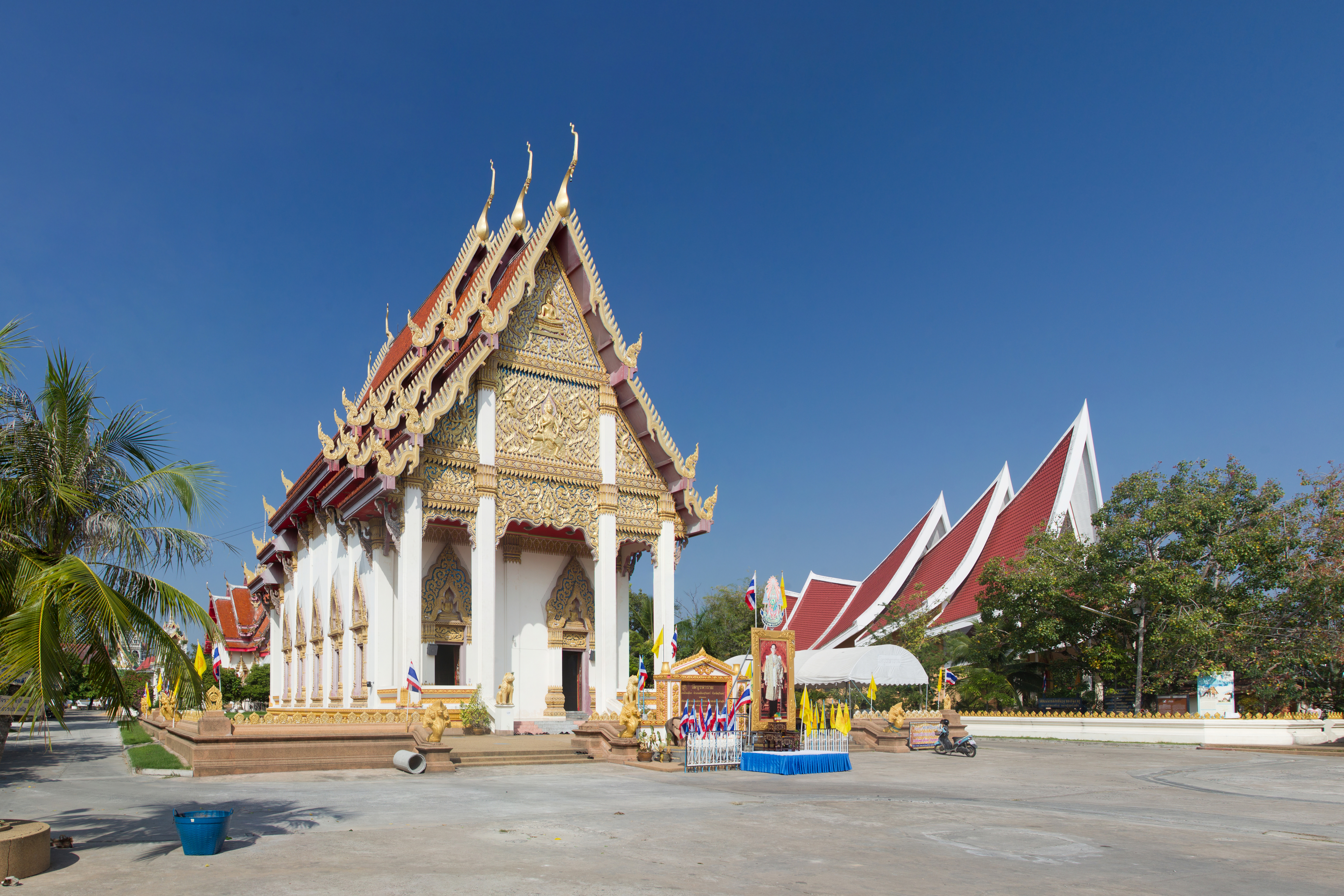
The ordination hall of Wat Burapharam, Surin's principal town temple. Photo: JJ Harrison, CC BY 3.0, via Wikimedia Commons
Coffee and breakfast in the shophouse streets
From the wat, drift into the old commercial grid. The classic stop is a shophouse cafe doing kopi-style coffee and soft eggs with toast soldiers, or a rice-porridge (khao tom) shop where a bowl with pork and ginger costs 40–60 baht. Watch for the elephant roundabout as you wander — Surin's civic mascot appears on signs, shrines and shopfronts everywhere once you start looking.
| Stop | Allow | Cost |
|---|---|---|
| City Pillar Shrine | 20–30 min | Free; offering set ฿20–50 |
| Wat Burapharam | 30–45 min | Free; donations welcome |
| Shophouse breakfast | 30 min | ฿40–100 per person |
| Whole loop on foot | 2–2.5 hours | Tuk-tuk hops inside town ฿40–60 if feet give up |

Carved detail at Wat Burapharam — slow down, the craftsmanship rewards a close look. Photo: JJ Harrison, CC BY 3.0, via Wikimedia Commons
Practical notes
Dress for temples (covered shoulders and knees), carry small notes for offerings, and finish by ten before the sun takes the streets. If you are in town during the Elephant Fair in November, do this walk on a weekday morning — the fairgrounds take the crowds and the old town stays beautifully local.
— ภาษาไทย —
เดินชมเมืองเก่าสุรินทร์ยามเช้า: ศาลหลักเมือง ตึกแถว และกาแฟเข้ม ๆ
เมืองเก่าของสุรินทร์ตอบแทนคนที่ยอมออกมาอยู่บนถนนตั้งแต่เจ็ดโมงเช้า อากาศยังไม่ร้อน ระฆังศาลเจ้าดัง พระออกบิณฑบาต และร้านกาแฟตามตึกแถวกำลังชงกาแฟแก้วแรกของวัน เส้นทางเดินง่าย ๆ ระยะทางประมาณสองกิโลเมตร พื้นราบตลอด เชื่อมศาลหลักเมือง วัดบูรพาราม และถนนการค้าสายเก่าเข้าด้วยกันในเช้าอันแสนสบาย ลองเดินในวันแรกที่มาถึง แล้วทั้งเมืองจะเข้าใจง่ายขึ้นในวันต่อ ๆ ไป
เริ่มที่นี่: ศาลหลักเมืองในย่านเมืองเก่าของสุรินทร์ คึกคักและสวยที่สุดในยามรุ่งอรุณ ภาพ: JJ Harrison, CC BY 3.0, via Wikimedia Commons
เริ่มที่ศาลหลักเมือง
ไปถึงตอนที่ชุดเครื่องถวายชุดแรกกำลังถูกขาย ดอกไม้ ธูป เทียน และทองคำเปลวจัดเป็นชุดราคา 20–50 บาท สังเกตวิธีที่คนท้องถิ่นเริ่มต้น จุดธูปสามดอก กล่าวคำอธิษฐานเงียบ ๆ แล้วปิดทองคำเปลวที่แท่นเสาหลักเมือง ผู้มาเยือนสามารถร่วมทำตามหรือยืนชมอย่างเคารพก็ได้ เวลายี่สิบนาทีแบบไม่เร่งรีบที่นี่บอกเล่าเรื่องสุรินทร์ได้มากกว่าป้ายพิพิธภัณฑ์ใด ๆ ประเพณีขอม ไทย และลาวหลอมรวมอยู่ในห้องเล็ก ๆ ที่จริงจังห้องเดียว
วัดบูรพาราม: วัดสำคัญประจำเมือง
เดินไปอีกไม่ไกลคือวัดบูรพาราม ที่ประดิษฐานหลวงพ่อพระชีว์ พระพุทธรูปที่ชาวสุรินทร์เคารพที่สุด อุโบสถเป็นอาคารที่งดงามที่สุดของเมืองเก่า ใช้เวลาชมงานแกะสลักอย่างละเอียด ฝีมือช่างคุ้มค่ากับการมองรอบที่สองอย่างช้า ๆ ยามเช้าคือช่วงที่วัดเป็นของชุมชนอย่างแท้จริง เด็กนักเรียนเดินลัดผ่าน ป้า ๆ จัดดอกบัว และสามเณรค่อย ๆ กวาดลานวัดอย่างใจเย็น
อุโบสถวัดบูรพาราม วัดสำคัญประจำเมืองสุรินทร์ ภาพ: JJ Harrison, CC BY 3.0, via Wikimedia Commons
กาแฟและอาหารเช้าบนถนนตึกแถว
จากวัด ลองเดินเล่นเข้าไปในย่านการค้าเก่า จุดแวะคลาสสิกคือร้านกาแฟตึกแถวที่เสิร์ฟกาแฟแบบโกปี๊กับไข่ลวกและขนมปังปิ้ง หรือร้านข้าวต้มที่ข้าวต้มหมูใส่ขิงหนึ่งชามราคา 40–60 บาท ระหว่างเดินลองสังเกตวงเวียนช้าง มาสคอตประจำเมืองสุรินทร์จะปรากฏบนป้าย ศาลเจ้า และหน้าร้านไปทั่วเมื่อคุณเริ่มมองหา
| จุดแวะ | เวลาที่ควรเผื่อ | ค่าใช้จ่าย |
|---|---|---|
| ศาลหลักเมือง | 20–30 นาที | ฟรี ชุดเครื่องถวาย 20–50 บาท |
| วัดบูรพาราม | 30–45 นาที | ฟรี บริจาคตามศรัทธา |
| อาหารเช้าตามตึกแถว | 30 นาที | 40–100 บาทต่อคน |
| เดินครบทั้งเส้นทาง | 2–2.5 ชั่วโมง | ตุ๊กตุ๊กในเมือง 40–60 บาทหากเดินไม่ไหว |
งานแกะสลักที่วัดบูรพาราม ใช้เวลาชมสักนิด ฝีมือช่างคุ้มค่ากับการมองใกล้ ๆ ภาพ: JJ Harrison, CC BY 3.0, via Wikimedia Commons
ข้อมูลที่ใช้ได้จริง
แต่งกายให้เหมาะสมกับการเข้าวัด (ปิดไหล่และปิดเข่า) พกธนบัตรใบเล็กสำหรับซื้อเครื่องถวาย และเดินให้จบก่อนสิบโมงก่อนแดดจะครองถนน หากคุณอยู่ในเมืองช่วงงานช้างเดือนพฤศจิกายน ให้เดินเส้นทางนี้ในเช้าวันธรรมดา เพราะผู้คนจะไปรวมกันที่สนามงานช้าง ส่วนเมืองเก่าจะยังคงความเป็นท้องถิ่นอย่างงดงาม


Comments
Post a Comment